






Platform: Nintendo 64
Developer: Nintendo EAD
Producer: Shigeru Miyamoto
Music: Koji Kondo
Released: November 21, 1998 (Japan), November 23, 1998 (North America), December 11, 1998 (Europe)
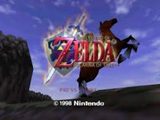
Ocarina of Time was Link's first adventure in full 3D, and it arrived with enormous expectations on its shoulders. It went on to set the template that almost every Zelda since has followed. The game has since returned on the GameCube, on the Wii and Wii U Virtual Console, and as Ocarina of Time 3D on the Nintendo 3DS, but this review looks at the original Nintendo 64 release.
Link begins as a boy in Kokiri Forest, the only Kokiri without a fairy, until the dying Great Deku Tree sends Navi to him with a warning about a man from the desert. That man is Ganondorf, and Link's quest to stop him takes him across Hyrule and then seven years into the future, where he wakes to find the kingdom in ruins. The jump from child to adult is the heart of the game. The bright, busy Hyrule of the first act makes the darker future hit hard, and coming back to familiar places to see what has become of their people is one of the most memorable parts of the journey.
The biggest achievement here is how naturally Zelda's sword fighting and exploration make the move to three dimensions. Z-targeting locks Link onto an enemy so you can circle, guard and strike without fighting the camera, and the context-sensitive action button lets one press climb, push, grab or talk depending on what is in front of you. Both ideas felt new in 1998 and have been borrowed by countless 3D action games since.
The dungeons are the real highlight. The Forest Temple's twisted rooms, the Shadow Temple's sense of dread and the Spirit Temple's split child-and-adult design are among the best the series has produced. Each one revolves around a new tool, and the puzzles teach you how to use it before the boss puts that knowledge to the test. The Water Temple is the exception that proves the rule: its constant water-level changes and trips to the menu to swap the Iron Boots on and off can wear down even patient players.
Outside the dungeons there is plenty to do. Gold Skulltulas, Pieces of Heart, the mask shop, the trading sequences, fishing and horseback riding on Epona all give you reasons to explore every corner of Hyrule. The ocarina itself is a brilliant touch, since the songs you learn change the time of day, call your horse and warp you across the map.
By today's standards the visuals are blocky, and the pre-rendered backdrops in Castle Town look rough. But the art direction still does a lot with very little, from the sunset over Lon Lon Ranch to the eerie quiet of the ruined market. Koji Kondo's soundtrack is the standout. Many of the songs, from Saria's Song to the Gerudo Valley theme, have become some of the best-loved music in gaming, and tying them to the ocarina means you are playing them yourself. The camera occasionally struggles in tight spaces, and the early hours can feel slow before Hyrule opens up.
Ocarina of Time is not perfect. The Water Temple is a chore, some of its sidequests lean heavily on trial and error, and its age shows in the visuals and camera. None of that changes what it accomplished. It turned the Zelda formula into a fully realised 3D world, filled it with brilliant dungeons and unforgettable music, and told a coming-of-age story that still lands. More than two decades later, it remains essential for any Zelda fan and a landmark for anyone interested in the history of video games.
Reviewed by Zelda Cavern.


