






Release - The Legend of Zelda: Majora's Mask first came out on the Nintendo 64 in Japan in April 2000, followed by North America in October 2000 and Europe in November 2000. It needs the N64's Expansion Pak to run. The N64 game was later re-released on GameCube as part of The Legend of Zelda: Collector's Edition and on Virtual Console, and it's now on Nintendo Switch Online. Majora's Mask 3D, a remake for the Nintendo 3DS, launched in February 2015.
Not long after Ocarina of Time, Link is riding through a forest when a masked Skull Kid steals his horse and his ocarina and curses him into the shape of a Deku Scrub. Link chases him into Termina, a land that feels familiar and strange at the same time, where a grinning Moon is falling toward Clock Town. It will hit in three days. This is a much darker and sadder Zelda than its predecessor. It isn't really a story about saving a princess. It's about a whole town of ordinary people facing the end of the world, each one dealing with it in their own way.
The big idea is the 72-hour clock. One three-day cycle lasts under an hour in real time, and when it runs out, the Song of Time sends Link back to the dawn of the First Day. He keeps his masks, songs and key items, but nearly everything else in Termina resets. At first that's daunting, but it soon becomes the game's greatest strength. Every person in Clock Town follows their own schedule, and the Bombers' Notebook keeps track of who needs help and when. Learning those routines, and working out how to change them, is what makes Majora's Mask so absorbing. The Anju and Kafei quest in particular is one of the best stories the series has ever told.
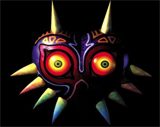
Masks are the other half of the design. There are 24 to find, and the three transformation masks change how Link plays completely. Deku Link skips over water and glides from flowers, Goron Link curls up and rolls at speed, and Zora Link swims like a torpedo. There are only four main temples, which is fewer than most Zelda games, but they're dense, clever and demanding, with Stone Tower Temple as a real highlight.
The clock isn't for everyone. Losing your rupees and dungeon progress on a reset can feel harsh, the N64 save system takes some getting used to, and players who like to wander at their own pace may feel rushed. The Inverted Song of Time eases the pressure a lot once you know about it, but the game doesn't make a point of telling you.
Majora's Mask was built on Ocarina of Time's engine and reuses many of its character models, but it puts them to clever use. Familiar faces turn up as new people with new problems, which adds to the uneasy sense of being somewhere that's almost, but not quite, home. The Expansion Pak lets you see further than in Ocarina of Time and fills Clock Town with more life. Koji Kondo's soundtrack is outstanding, and the way the Clock Town theme changes on each of the three days makes the countdown feel real. The 3DS remake adds sharper visuals, a friendlier save system and a clearer notebook, and it reworks the boss fights.
Majora's Mask is the boldest game in the Zelda series. It swaps sprawl for depth, and a big world for a small one that you get to know inside out. The time limit will put some players off, and the game asks for patience and a little note-taking. Those who stay with it will find a strange, moving adventure that nothing else in the series has quite matched. It's essential for any Zelda fan, in either its original N64 form or the 3DS remake.


